
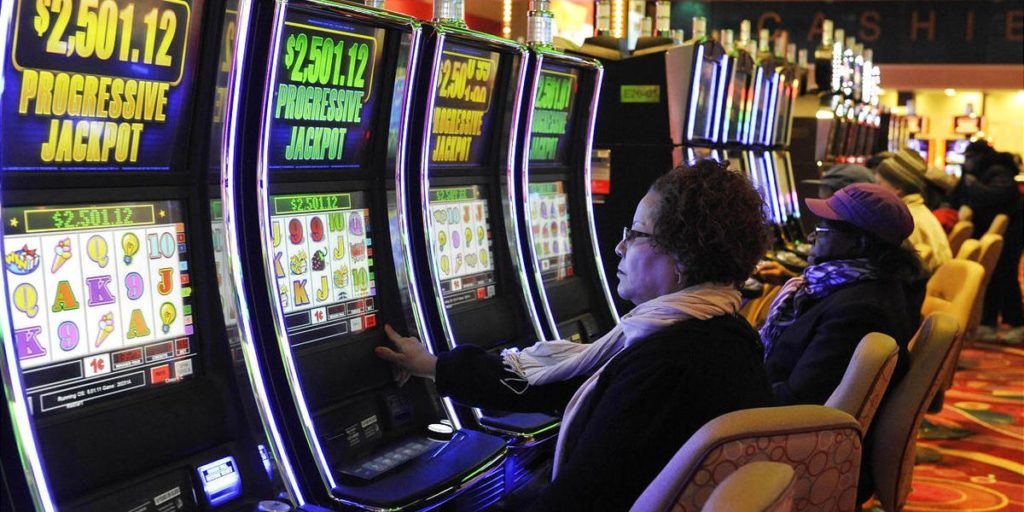
Every casino game, if it is a spinning slot reel or a hand of blackjack handled by a live presenter, works with a built-in mathematical mechanism that secures the venue maintains a predictable long-term advantage. That mechanism is formally known as the house edge, and it is significantly more than an abstract percentage printed in a game’s help file. For players joining an environment such as Betn1 Casino, understanding exactly how this edge is calculated, used and altered by bonus terms transforms a casual session into a strategic encounter. The house edge does not control the outcome of any single round; it unfolds across thousands, even millions, of bets. It works with volatility, return-to-player figures and wagering requirements in ways that are commonly misunderstood. By studying the core rules that govern edge across game categories, payment cycles and promotional structures, players can better interpret the real cost of entertainment and identify where their bankroll resilience is most robust.
1. Understanding the House Edge: The Inherent Mathematical Advantage
The house edge is the percentage of each wager that a casino expects to keep over an extremely large sample of bets. It is not a fee taken from every stake, nor is it a dynamic change that singles out individual players. Instead, it results from the gap between the true odds of an event happening and the payout odds provided by the game. In European roulette, for example, a straight-up wager on a single number pays 35 to 1, yet the true odds of getting that number on a 37-pocket wheel are 36 to 1. That one-unit gap across all possible outcomes yields a house edge of 2.70%. In blackjack, the edge arises from the rule that players must act first and risk going over before the dealer plays. Over millions of hands, the mix of rules such as payouts for natural blackjack, deck count and dealer staying on soft 17 drives the house edge below 1% with optimal strategy. At Betn1 Casino, every supported title displays its theoretical RTP, and the house edge is simply the inverse of that figure, though the real-world experience is always filtered through short-term variance.
4. Slots and Their Predefined House Edge: Random Number Generators and Paytables
The Function of the Random Number Generator
Every licensed slot game relies on a certified random number generator, or RNG, that produces a continuous stream of independent events. The house edge in slots is not applied per spin but is embedded in the numerical conversion of the RNG output to the paytable. Each symbol combination gets a specific probability weight, and the paytable payouts are calibrated so that the sum of all conceivable results, weighted by their probability, equals the target RTP. For a 5-reel game with thousands stop positions, the gap between the most valuable symbol clusters and their true hit rate is enormous. This is why the top jackpot combination may hypothetically appear once every several million spins. The RNG and paytable design at Betn1 Casino’s slot selection, acquired from many studios, are separately tested, guaranteeing the presented edge is accurate. Players should examine the paytable to grasp where the game concentrates its payouts, as some titles place unequal value in bonus rounds that trigger infrequently.
Bonus Purchase Mechanics and Edge Distortion
An ever more frequent mechanic enables players to purchase direct access into a slot’s bonus round for a fixed multiplier of the base stake, typically between 50x and 100x the bet. While the house edge of the core game stays unchanged, the choice to buy a bonus modifies the risk profile dramatically because the total wager is centered into a single high-variance event. Some bonus buy features are programmed with a marginally distinct RTP than the base game, a fact typically stated in the help files. At Betn1 Casino, these titles are clearly marked, and the operator’s ethical gaming structure promotes reviewing the RTP before triggering such purchases. The edge by itself remains stable notably, but the way immediate capital is consumed alters, making bankroll management even essential.
5. Table Games Section: Where Strategy Can Cut the House Advantage
No game type demonstrates the relationship between player decision and statistical edge more plainly than table games. In blackjack, the base house edge of approximately 0.5% requires flawless basic strategy. Each deviation — hitting a 12 versus a dealer 4, or holding on a soft hand that needs to be doubled — incrementally pushes the edge higher, frequently into the 1.5%–2% range. Roulette wheels gives no such influence, but the choice between single-zero European and American double-zero wheels wheels moves the casino advantage from 2.70% to 5.26%. Baccarat’s main bets stand at 1.06 percent on the banker and 1.24 percent on the player, with no strategy needed. Betn1 Casino features multiple variants of each traditional game, commonly organized by rule set and table stakes. Blackjack players, seeking out tables that pay 3:2 on blackjacks and allow doubling after splitting will hold the house edge at its smallest value. Inserting the right table game into a gaming session functions as an edge control tool.
6. Live Dealer Games: Openness and Instant Play
Live dealer streams bridge the gap between digital RNG titles and brick-and-mortar floors, yet the house edge operates identically to its physical counterparts. In live roulette, a camera displays the real wheel and ball, but the 37-pocket grid still holds the same 2.70% edge. What shifts is the pace of play and the informational environment. With real dealers spinning at roughly 45 to 60 rounds per hour, the number of decisions per hour is lower than a turbocharged RNG version, which can clock over 300 rounds. This slower tempo reduces the total amount wagered over a session, effectively cutting the expected monetary loss even though the percentage edge remains constant. Betn1 Casino’s live lobby features games from leading providers, with multiple camera angles and chat functions that reinforce a sense of control. The transparency of watching a physical wheel or shoe eliminates any lingering doubt about RNG fairness, though it offers nothing to alter the underlying mathematics.
3. How Variance and Hit Frequency Affect the Edge Experience
Two titles with matching house edges can offer radically different player experiences due to variance, also called volatility, and hit frequency. Variance defines how far and how often results differ from the statistical average. A low-variance slot with a 4% house edge will produce consistent, small wins that support a bankroll through long sessions, while a high-variance game with the same edge will deliver long dry spells broken by infrequent big wins. Hit frequency, the percentage of spins that give any win at all, often falls between 20% and 40% on modern video slots. A game with a 22% hit rate will feel markedly harder than one with a 35% hit rate, even when the long-term edge is identical. Understanding this distinction is critical when selecting titles at an operator that offers hundreds of slots, such as Betn1 Casino. Narrowing the search by volatility rating and bonus mechanics can match a game’s behaviour with a player’s session goals, whether those are longer play sessions or a shot at a big multiplier.
7. Bonus Terms and Wagering Obligations: The Hidden House Edge Factor
Promotional incentives such as deposit bonuses and free spins add a further dimension into the house edge assessment. A 100% matching bonus awarded upon funding is not free money; it arrives bound to wagering requirements that require the bonus amount — and often the initial stake — be turned over a specific multiplier before any cash-out is authorized. A 35x wagering requirement on a £50 promotion produces a mandatory wagering of £1,750. If the user applies that total amount wagered on slots with an average RTP of 96%, the expected loss from the casino advantage is £70, which is greater than the promotional value. Moreover, offerings do not count uniformly. At Betn1 Casino, bet amounts on table games and real dealer games commonly count a lower portion toward wagering, occasionally as low as 10% or even 0%. The following enumeration presents the most frequent counting categories users will come across:
- Slot machines: Usually 100% contribution, positioning them as the most rapid way to fulfilling requirements but also subject to high volatility.
- Casino table games such as 21 and the roulette wheel: Frequently 5% to20%, drastically impeding progress.
- Real dealer games: Commonly 0% to10%, sometimes omitted completely from promotional wagering.
Reading the full bonus conditions before opting in is essential. A promotional headline that appears generous can possess an actual house edge well above the standard game’s mathematical advantage once the play-through conditions are calculated.
Number two. House Edge vs RTP: Comprehending the Inverse Relationship
Return to Player, universally abbreviated as RTP, indicates the percentage of total wagers a game is configured to return to players over its lifetime. If a slot machine features an RTP of 96%, the house edge is 4% — a straightforward inverse relationship that becomes far more nuanced once bonus conditions and game speed are factored in. A high RTP alone does not ensure a gentler session, because the rate at which wagers are resolved matters enormously. A table game with a 99% RTP played slowly for an hour might expose a bankroll to a smaller expected loss than a high-volatility slot with 96% RTP spun rapidly in turbo mode. Furthermore, the RTP figure is a theoretical limit attained only after millions of rounds. In a single evening, results can deviate sharply. Players checking the game lobby at Betn1 Casino will find RTP information for slots and table games in the help files, and these percentages should always be reviewed against the operator’s published bonus contribution weights, because a game with a favorable base edge may be omitted entirely from promotional play.
8. Deposit Options and Cashout Timelines: Indirect Value Impacts
While payment processing does not affect the statistical house edge of any game, it has a tangible effect on the value a player captures from a session. Hold-ups between a withdrawal request and the receipt of funds in a bank account create an opportunity cost, especially if a player is using funds that could otherwise be invested or be used elsewhere. Quicker options minimize this hindrance. Betn1 Casino provides a range of payment channels, and typical processing times adhere to industry norms. The table below, outlined for clarity, shows the link between withdrawal method, speed, and any standard verification steps.
- E-wallets such as Skrill and Neteller usually handle withdrawals within 24 hours of account verification, often viewed as the most effective route.
- Credit and debit card withdrawals typically take 3 to5 banking days, as they pass through card scheme clearance cycles.
- Bank transfers may extend to5-7 business days, and sometimes attract a small processing fee on the operator’s side.
Verification procedures, mandated by licensing conditions, also impact timing. Sending a complete set of identity documents early in the customer lifecycle speeds up future withdrawals. The combined effect of method choice and verification readiness turns a minor operational detail into a real consideration that many experienced players regard as part of the overall cost of playing at an online casino.
9. Regulation Security and Fair Play: Guaranteeing the Edge Remains as Promised
The house edge figures quoted in game rules are meaningless unless they are independently validated by a regulatory authority and independent testing betn1casino.eu. Regulatory frameworks require operators to provide their game catalogues to recognized test houses that confirm RNG integrity and payout precision. While Betn1 Casino’s specific licence details should always be verified via the footer of its official website, the platform functions within a system that enforces regular audits and releases RTP reports. Beyond the numbers, data security is crucial in maintaining the integrity of the edge. If personal or financial data were compromised, the resulting distraction and potential financial harm would outweigh any mathematical advantage. The site utilizes TLS encryption to protect transmissions and adheres to responsible gaming protocols such as deposit limits and self-exclusion tools. These systems do not change the edge, but they make certain that the edge is the only cost a player is bearing. When the technological environment is sound, players can zero in on understanding the mathematical rules without worrying about external interference.
